Next case
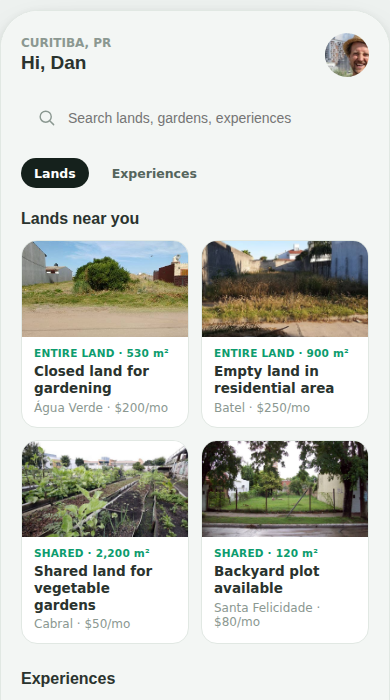
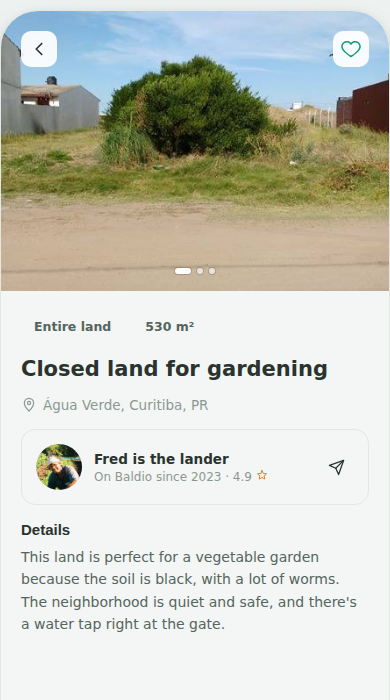
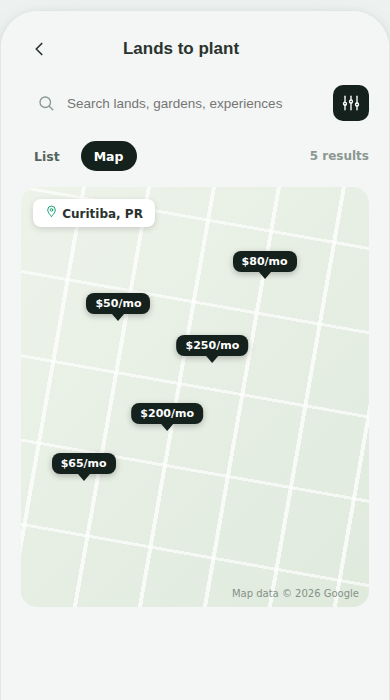
Baldio: turning empty land into shared soil
A two-sided marketplace for people who want to grow food and people with land to spare.
At Ambev Tech, new designers got a laptop, a dense wiki and a Buddy who rarely had time. I designed an app to fix that. Three years later, I built it for real as Embarkei.
I was the Design Lead for the Sales vertical at Ambev Tech, leading twelve designers. On paper, every new hire got a Buddy: a colleague assigned to help them find their footing.
In practice, that person rarely had the bandwidth. The new hire got a laptop and was mostly left to figure it out. There was a wiki inside Microsoft Teams, so dense that finding anything in it was its own onboarding task.
I noticed because I kept living it. Every time someone joined my team, I became the onboarding, walking each designer through the same tools, context and culture, one conversation at a time.
I stopped treating this as something I just did and started treating it as something to design. I talked to my leadership and to People & Culture about what really mattered in someone's first weeks. Then I talked to the designers who had already been through it: what they wished they had on day one, and what had actually stuck.
Nobody needed more information. They needed it in pieces they could act on, in an order that made sense, with a person attached.
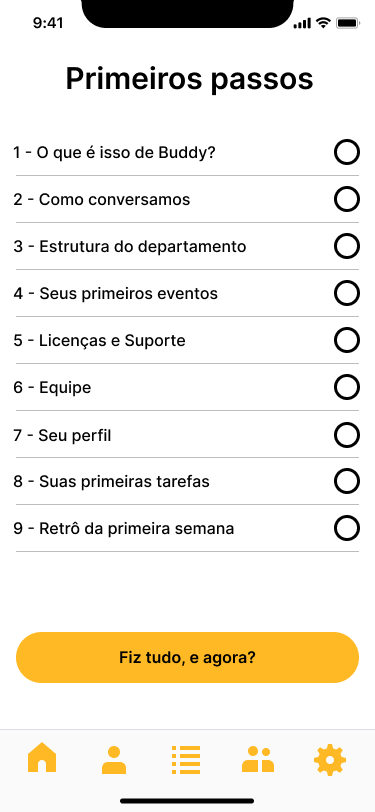
The manager builds a checklist for the role and team once, in minutes, instead of repeating it from memory.
The new hire checks off tasks at their own pace. Both sides see where things stand without a status meeting.
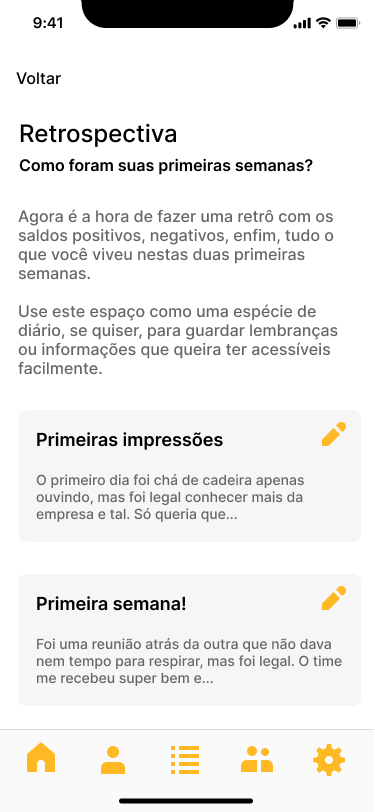
A two-week retrospective turns one person's experience into a better process for the next one.
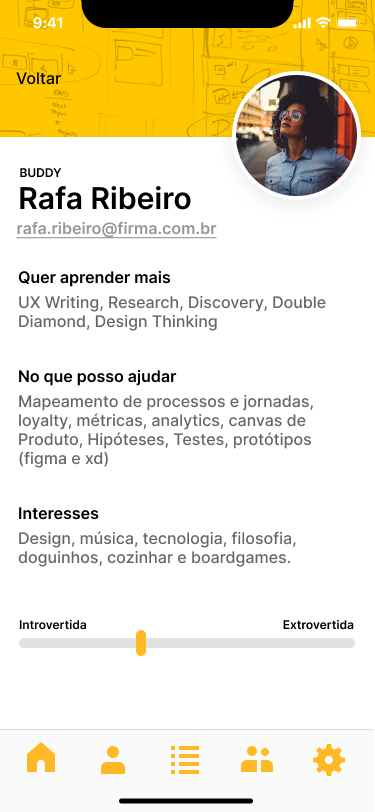
Real screens from the Figma prototype I designed at Ambev Tech, in Portuguese, the way new hires saw them.
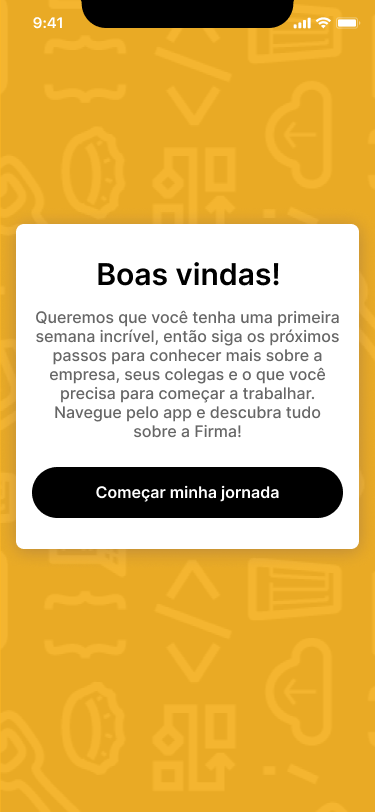
I left Ambev before the prototype was complete, so a few flows are still stubs. I'm sharing it as it is, because real design work happens under real constraints like time.
The problem didn't go away. Every company I talked to had a version of the same story: onboarding that ends on day one, a lost PDF, a colleague who helps when they can.
So I turned the design into a working product. Embarkei is a live onboarding SaaS for Brazilian companies, designed and built end to end by me, with AI as my build partner: Claude for code, Supabase for data and security, Vercel for deploys.
The prototype answered "what should a new hire see?". The product had to answer a harder one: what happens when many companies, their managers and real people's feedback all live in the same system?
Tasks for the first 30, 60 or 90 days. Built once, used for every hire.
Each hire's own path, started by email or link, with dates in business days.
A named colleague who follows the hire's progress.
An end-of-journey reflection that feeds the next template.
A manager dashboard with only the journeys they own.
Most of the real design work happened in the gap between a prototype one team would use and a product any company could trust.
The Buddy follows progress but cannot read the logbook. Retrospectives often talk about the Buddy, so hiding it is what makes honesty possible.
Logbook entries are signed. Anonymous feedback is easier to give but impossible to act on, and the loop only works if a manager follows up.
A journey is a copy of the template when it starts. Managers can improve templates without breaking the path of someone halfway through.
Target dates count working days, so a hire who starts on a Thursday isn't "late" by Monday.
Managers see only their own hires. Less noise for them, less exposure of other teams' people.
Each company's data is isolated in the database itself, verified by 24 automated checks. For an HR product, that's the price of entry.
Embarkei is live and working, with accessibility (WCAG AA in light and dark mode), an audit log and privacy tools to export, correct and delete personal data. It hasn't launched commercially yet, so there are no usage numbers here. Next up is a small set of pilot companies, and I'll update this case with what they teach me.
Training tracks inside the same journey, starting with sales onboarding, so companies don't need a separate LMS for the first months.
Tasks, pacing and Buddy check-ins that adjust to role and progress, with logbook data shaping the next template. AI doing that quietly, instead of a manager by hand.
A two-sided marketplace for people who want to grow food and people with land to spare.